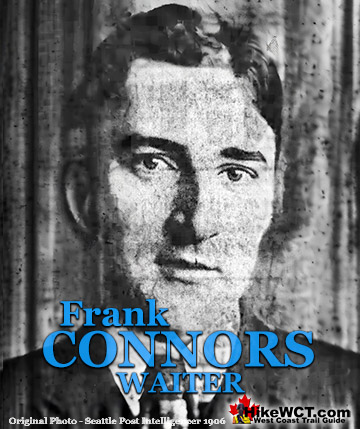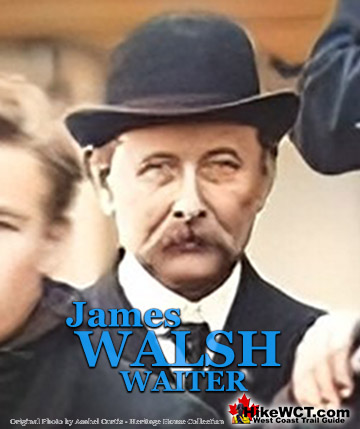

James (or John) Walsh was a waiter on the Valencia who survived on the Topeka Raft. He lived in San Francisco with his parents, bother and sisters. He had been working with the Pacific Coast Steamship Company for several years.
The Valencia Disaster
1. The Valencia
2. The Voyage
3. The Boats
4. The McCarthy Boat
5. The Bunker Party
6. On the Valencia
7. The Rafts
8. The Turret Raft
9. The Rescue Ships
10. The Aftermath
11. The Survivors
12. The Lost
The West Coast Trail
Prologue
1: The West Coast Trail
2: When to Hike & Fees
3: Trailheads
4: Getting There
5: Considerations
6: Campsites
7: Shipwrecks
8: Routes
9: Sights & Highlights
Walsh was first reported as missing and his family grieved for two days until they received a wire from him to tell them he was alive and had been rescued on a life raft. He was briefly interviewed in newspapers where he reported that if they were not found by the Topeka, they would all have been corpses in two hours.
“..for they had been drenched to the skin and exposed to the gale and the billows for forty-eight hours.”
He praised Captain Johnson and was adamant that the Captain did not order the catastrophic launching of the lifeboats after the ship struck. He charged that the passengers became panic stricken and piled into the lifeboats and frantically cut the ropes dumping themselves into the sea.
The San Francisco Chronicle on February 2nd, 1906 reported: “Seven of the Valencia’s Crew Arrive on Topeka”. The story ran on the front page and had pictures of them, John Walsh, Patrick O’Brien, Walter Raymond, Paul Primer, Frank Lehn, Charles Fluhme and John Johnson. “No one of the entire lot, except John Walsh, whose right leg had been jammed, appeared any the worse for the trying ordeal”. Walsh was briefly interviewed after the disaster, however few details of his experience can be easily found.
Just before midnight on Monday, January 22nd the Valencia struck a rock or ledge a few hundred metres from the shore of Vancouver Island. With her bow lodged on the underwater obstruction, the Valencia’s stern drifted to point toward the shore. It was estimated that in the first 5 or 6 minutes that 6 feet of water had already poured into the ship and she was sinking fast. Captain Johnson ordered the ship’s engines full astern into the darkness to beach her before sinking. Moments later she backed onto a reef just 18 metres from the shore and surrounded by crashing water. In relation to the West Coast Trail today, the location is just past KM18 and in the middle of a 4 kilometre stretch of steep cliffs and jagged reefs.
Approximate Location of the Valencia Along the West Coast Trail

The Valencia was surrounded by huge waves breaking over the surrounding reefs and slamming into the ship. Freight Clerk Frank Lehn later described the chaos:
Great seas broke over the ship as soon as she struck the second time, and when she drifted back on the reef, stern on, the seas raked her from fore to aft, carrying everything before them. Never have I seen such waves. They appeared to be as high as the masthead. One after another in rapid succession they rolled over us, and people were carried away in bunches. Their agonized shrieks could be heard above all the fiendish roar of the wind and sea.
12-12:30am Tuesday 23 Jan 1906: Lifeboats Launched
The Valencia was equipped with six lifeboats and a smaller working boat. These seven boats could hold up to 181 people. Just enough to accommodate the 170 crew and passengers aboard. There were also three life rafts on board which could hold up to 12-18 people each, though one slid off the ship and was lost. Moments later the ship collided with a rock shelf and held in that position. The captain then ordered the lifeboats lowered to the saloon rail in preparation for launching. Panic ensued in darkness, rain, crashing waves, and boiling surf. Officers and crew were overwhelmed by the chaos. Six boats would be launched in the frantic 30 minutes that followed. Lifeboats No.1, No.4 and the working boat No. 7 were haphazardly released or cut free causing them to fall by one end and tossing the passengers into the water drowning all but one. Passengers watched in horror as dozens of people, many of them woman and children disappeared into the swirling ocean next to the ship.
Surviving the Night: Tuesday Morning 23 Jan 1906
Remaining on board were an estimated 90 to 110 people. They had just witnessed 60 to 80 people drown or disappear into the night and 6 of their 7 lifeboats destroyed or lost. Survivors later testified that this all occurred within 30 minutes of backing onto the reef. With the time just a few minutes after midnight and the ship’s power gone, they had only two small hand lamps to wait out the night. The survivors were mostly located in the dining saloon and what food that could be salvaged was shared around. Most of the food and supplies on the Valencia were already under water or inaccessible. Throughout the night the ship was hammered by the ocean and quickly breaking apart, settling lower. By Tuesday morning water was rising into the saloon and passengers had to move higher and higher on the ship. People packed into the small staterooms on the saloon deck and most were forced onto the hurricane deck.
That first morning, daylight revealed a horrific sight which Frank Lehn described:
The bodies of the drowned, which must by that time, must have numbered fully sixty, were seen floating around the beach and dashing up against the iron bound cliff, which loomed so close to us. The bodies were caught by the waves, thrown against the rocks and then caught by the undertow and drawn back. The sight was horrible.
9:30am Wed 24 Jan, The Queen Finds Valencia
The Valencia wrecked just before midnight on Monday, January 22nd. About 34 hours later, at about 9am Wednesday morning the situation on the Valencia was horrific. Battered by waves, the ship was breaking apart and sinking lower into the crashing ocean. Rescue ships had appeared in the distance, however no attempt at rescue had been made. Thomas Carrick, first assistant engineer on the Valencia later recalled, “The first ship that hove in sight was the Queen. The weather was nice until that time, but the wind shifted and a choppy sea set in. The Queen stood off about a mile and a half. I saw two boats swinging from the davits as if they were in readiness to be lowered.” Joseph McCafferty, a passenger would later testify in the Valencia inquiry, “When the steamers Queen, Salvor and Czar came in sight he thought that it would be a matter of only a short time before all were rescued. Frank Lehn described what he remembered:
Along about 9 o'clock we sighted a steamer in the offing. She came to within about a mile of us and lay there. At first we thought we were saved. There was joy among us poor castaways then. The women in the rigging pulled off their dresses to wave to the steamer, and the men shouted with joy. But the steamer kept off in the distance and we soon saw that she could not approach closer. In a short time she was joined by a tug. Now we expected aid, for a light draft vessel could have reached us. But she, too, kept away. No man can understand the agony of watching these two vessels out there, and knowing that they were anxious to aid us but were unable to do so.
Here we were clinging to the rigging or to the bits of the deck house which was left, and there was the steamer and the tug about a mile off anxious to help us. This was worse than death. The poor women felt it the most keenly. But they showed a heroism that put the men to shame. Most of them prayed, and I hope their religion gave them comfort. Few of them murmured. All were noble and self sacrificing. But it was a terrible experience to see those two ships in the offing and then to look at those women in the rigging, almost frozen by the flying spray and rain and only half clothed. Every little while when a great roller would come over us some poor devil in the rigging or on the deck would be swept away or dashed on the rocks
Valencia's Last Two Life Rafts
Knowing the ship could collapse under the waves at any moment, the crew decided to launch the last two life rafts. The rafts are designed to float and remain stable, however those on board would be constantly soaked from waves crashing over the sides. The survivors on the Valencia were already freezing cold, hungry and thirsty and most refused to get on the rafts. The first raft to be launched had only 10 men on board as everyone else was afraid to get on and expected rescue to come quickly now that a ship had arrived. Boarding the raft from the Valencia was done by jumping from the ship into the freezing ocean far below. This, along with many other reasons may explain why the raft was only partly filled.
First assistant engineer Thomas Carrick described the horrific scene on the Valencia before he jumped overboard to get on the raft:
“The raft we left on was the last thing aboard the ship for anyone to get on. The Valencia was broken up and the two parts of her were ten to fifteen feet apart, the stern working toward the shore. The foremast was standing, but there was no one in the rigging. The only persons washed overboard that I saw were a woman and her child. The seas were very heavy and knocked us down unless we had something to hold to. There was only about fifteen feet of the hurricane deck left for us to stand on, and I should judge that there were fifty to seventy-five persons on this.”
12pm Wed 24 Jan, Spotted by Topeka!
The battered raft headed out to sea toward the rescue ship, the Queen in the distance. To their horror the Queen sailed away. When they lost sight of it they turned toward the land. Freezing and constantly wet they were tossed by the waves and two hours later, close to dead from exposure, they sighted another ship, the Topeka and were finally rescued. Carrick remembered the moment the City of Topeka was sighted. "An incoherent shout from one of the passengers drew our attention and following his pointed finger we saw what afterwards proved to be the Topeka.”
Topeka Boat & Valencia's Second Life Raft January 24th, 1906

Close to Death Before Rescue
Carrick also remembered how desperately close to death they were.
“It seemed as though her arrival was a merciful messenger from God. In a few minutes she was alongside, but some of the men lay inert and powerless to grasp lines cast from the Topeka. Finally, all were hauled aboard and every attention was shown us by the rescue party. If the Topeka had not arrived when she did we would probably have been lost, all of us were rapidly succumbing to the intense cold.”
Valencia Second Life Raft Rescue

Nineteen on Raft Rescued by Ship
Nineteen on raft rescued by ship was the headline in the Buffalo Evening Standard on its January 25th, 1906 edition which described the rescue:
The Topeka picked up a little craft at 1 o'clock yesterday afternoon, six miles off Cape Beale, with 19 survivors of the Valencia on board. The men were in pitiable condition and almost dead from exposure... They were half frozen and practically unconscious from the exposure. The raft was sighted about 12 o'clock. A terrible sea was running. One minute the raft was poised on top of a wave and the next it would be lost from view in the gully formed by the mountainous breakers. The men, on their frail support, battled bravely with a pair of oars to reach the City of Topeka, which could not run any closer to them...The sight of the poor creatures on the raft brought tears to the eyes of the sailors on the vessel. In the stern of the raft sat sat an old man, with snow white hair and pallid features. Three other men were lying in a senseless heap in the rear, washed by every swell and retained solely by the bodies of the other men, who were closely packed. Time and time again great seas swept over them. The work of rescuing them was dangerous. The men were too exhausted to tie a rope about themselves.

Cornelius Allison is recognizable in this photo of the survivors from the second raft boarding the City of Topeka at approximately 1pm on January 24th, 1906, 37 hours after the Valencia wrecked. He is the white haired man sitting in the boat with the white life jacket on. He had just been pulled out of the water after falling off the raft when attempting to board the ship.
The Nineteen Topeka Raft Survivors
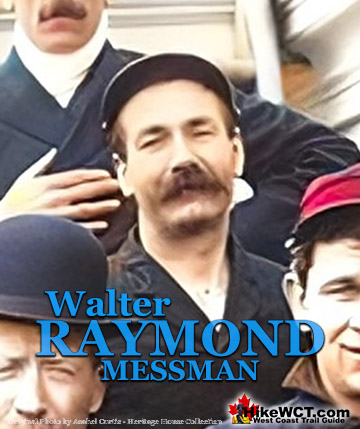
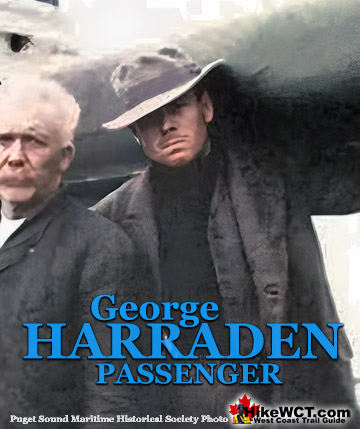
The Valencia survivors with James Walsh on the second life raft, which became known as the Topeka Raft were: waiter Charles Hoddinott, baker Charles Fluhme, passenger Cornelius Allison, first assistant engineer Thomas Carrick, fireman William Doherty, passenger George Harraden, passenger A.H. Hawkins, third cook John Johnson, coal passer W.D. Johnson, first assistant freight clerk Frank Lehn, passenger Joseph McCaffrey, waiter Patrick O’Brien, second officer Peter Peterson, fireman Paul Primer, messman Walter Raymond, quartermaster Martin Tarpey, passenger Grant L. Willitts and fireman John Segalos.